


Nebraska U pioneers breakthrough swine vaccine innovation
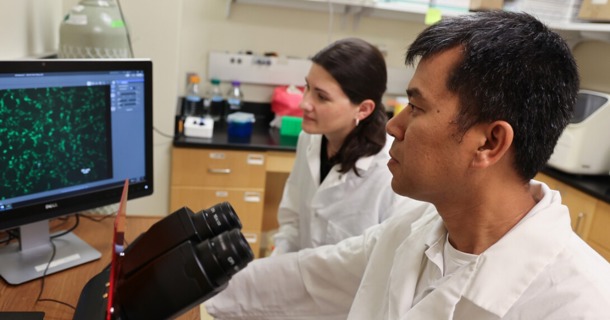
Lincoln, Nebraska, June 17, 2026 — Husker scientists have developed a new swine influenza vaccination technique whose low cost and adaptability can greatly strengthen disease protection. This progress, part of the University of Nebraska–Lincoln’s overall focus on livestock vaccination innovation, directly benefits the state’s $5 billion, 3.6 million-head swine sector.
The new vaccination approach, explained in a recent peer-reviewed paper in npj Vaccines, encases DNA into fat-like microscopic carriers, called lipid nanoparticles, that are then injected into pigs’ muscle tissue. A single dose released DNA that generated strong antibody responses within seven to 14 days.
Previous DNA-focused vaccine approaches described in academic literature failed to generate such strong protective responses in combating swine influenza.
In addition, current swine influenza vaccines, which are formulated using whole inactivated virus particles, may sometimes enhance respiratory distress in pigs when they are later infected with a different, non-matching viral strain. The Nebraska approach, in contrast, produced no worsening of respiratory conditions but instead prevented it.
In short, the new approach developed by Nebraska and partner research institutions offers key advantages — it is fast, effective, low-cost and easily updatable, said Hiep Vu, associate professor of animal science. Vu, an internationally recognized expert in animal virology, provided mentorship for the project, which was primarily carried out by Husker graduate student The Nguyen, now a doctoral student in biomedical engineering at the University of Connecticut.
The need for low-cost, updateable swine vaccines is particularly great because pigs are remarkably susceptible to viral infection not only from other swine, but from other species, Vu said. Pigs, in fact, are described as virological “mixed vessels” because they can be infected simultaneously with multiple influenza strains from swine, birds and humans.
The resulting genetic comingling can create new hybrid flu viruses with unpredictable traits, rendering previous vaccines ineffective. Although it is not common at present for pigs to be infected with highly pathogenic avian influenza, future swine contamination by a novel strain of that highly virulent disease would raise major concern.
Updating vaccines using traditional methods is time-consuming and expensive, however. And vaccine development to address highly pathogenic avian influenza is especially complicated because the process requires handling the virus in high-biosafety labs.
The new method developed at Nebraska sidesteps those complications because it uses only a key, non-infectious component of the virus, and scientists can quickly synthesize the component. Under that approach, an updated vaccine could likely be developed within a month, Vu said.
The focus, then, is not on a single vaccine. It is on developing a vaccine “platform” to efficiently generate updated versions as the virus continues to evolve.
The university’s facilities and expertise are well suited for advanced research on animal vaccines, Vu said. Sarah Sillman, a veterinary diagnostic pathologist with the Nebraska Veterinary Diagnostic Center, is a key partner. Her detailed analysis of vaccinated and unvaccinated research animals is an important part of the research collaboration.
The diagnostic center and Vu partner on other vaccine-related projects, including vaccines against porcine reproductive and respiratory syndrome virus, another major virus affecting the swine industry.
Vu, who has secured more than $3 million in competitive U.S. Department of Agriculture funding and $2 million in collaborative grants for vaccine research, aims to follow up on the new project by studying possibilities for a similar vaccine approach for poultry.
“My hope is that if we can use the same technology for multiple species, that will make this approach more like a versatile responder,” he said. “You can have a standard vaccine platform that can be used for different species.”