


Husker researchers explore hidden nitrogen, new ways to reduce groundwater risk
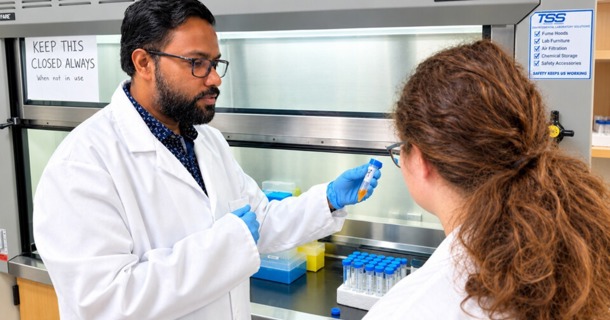
Lincoln, Nebraska, Oct. 9, 2026 — A University of Nebraska–Lincoln research team has received a three-year, $496,722 National Science Foundation grant to investigate an understudied reservoir of organic nitrogen that may shape groundwater quality long after nitrogen management strategies are in place. A separate five-year, $357,000-plus award from the Nebraska Corn Board will help the researchers evaluate approaches that may proactively reduce nitrate risk before it reaches groundwater.
Clean groundwater is vital to drinking water supplies, agriculture and rural communities, but nitrogen contamination remains a persistent challenge. About four out of five Nebraskans drink groundwater. Much of it sits beneath some of the most productive agricultural land in the world. Nitrogen fertilizer is a critical crop nutrient; however, when it leaves the root zone, it becomes a loss to the farmer and a concern for drinking water.
The puzzling part is what happens when nitrogen management practices are improved. Nitrate levels in some Nebraska wells continue to rise, even years after modern nutrient strategies to reduce excess nitrogen use have been implemented. A research team based at the Nebraska Water Center thinks the explanation lies in historical nitrogen stores buried in the deep vadose zone between the surface and the water table. The two new awards will support collaborative efforts to better understand these underground processes and evaluate proactive solutions.
Nebraska Water Center researchers have studied the vadose zone for four decades to understand how nutrients, including nitrogen, move from the land surface to the groundwater. The vadose zone is a critical region for the storage, transport and transformation of chemicals that can affect groundwater quality.
Nitrogen is an essential nutrient present in many forms and is applied as a fertilizer to crops like corn. While these plants take up the nutrients they need, any remaining nitrogen can convert into mobile nitrate. However, the process of particular interest to the Husker research team is if this mobile nitrate may react with soil carbon through microbes to become bound as organic nitrogen in the deeper soil layers. This reaction could potentially act as a slow-release reservoir that gradually breaks down and generates new nitrate years later in the deep vadose zone, moving toward the groundwater.
Nebraska Water Center researchers have found that organic nitrogen accounts for a large majority of total nitrogen stored in Nebraska’s deep vadose zone. While most studies of that underground nitrogen reservoir measure nitrate, the research team measures everything else, too.
“Most of the nitrogen down there isn’t nitrate at all,” said Arindam Malakar, assistant research professor at the Nebraska Water Center and the Daugherty Water for Food Global Institute, who leads the new project and is part of the School of Natural Resources. “It’s organic nitrogen, locked in forms nobody has been counting. It can break down slowly and may keep making new nitrate long after the fertilizer is gone.”
In conjunction with the NSF funding, the research team is also investigating a novel nitrate remediation approach currently under development. The goal is reducing the amount of nitrate in the vadose zone that becomes a groundwater contaminant, entering drinking water sources and creating challenges for communities and well owners. The Nebraska Corn Board, through corn checkoff funds, has supported the project “Remediation of Nitrate Plume Within the Vadose Zone, Being Proactive to Protect Groundwater Quality,” with more than $570,000 across five years, subject to the board's annual proposal review and approval.
“The primary reason we want to do it is to reduce the cost of treating water,” Malakar said.
Rather than treating water after it reaches the aquifer, the work focuses on nitrate while it is still held in the vadose zone above the water table, which is expected to be more efficient and economical. Preliminary estimates suggest the approach could be less expensive than current water treatment processes that cities and communities use to treat groundwater to safe levels for drinking water.
Initial controlled laboratory studies have shown promising results. Researchers will next evaluate the approach across soil conditions representative of different landscapes across Nebraska and assess effectiveness, repeatability, environmental safety, feasibility and regulatory considerations before any potential field deployment.
Malakar said the appeal of the approach is timing.
“By the time you see nitrate in a well, the decision that put it there was made a long time ago,” he said. “Once it’s in the aquifer, you’re paying to take it back out.”
Malakar envisions a future where the technology is deployed across Nebraska, reducing the amount of nitrate in the vadose zone that becomes a contaminant in the groundwater. That is several years out and contingent on results at every stage, from laboratory experiments to controlled field testing. But if it works, the project’s success could reduce the treatment burden on communities that rely on groundwater.
To meet the research team and learn more about its vadose zone research, visit https://go.unl.edu/vadosestory.