


Trail systems are important to rural Nebraskans, poll shows
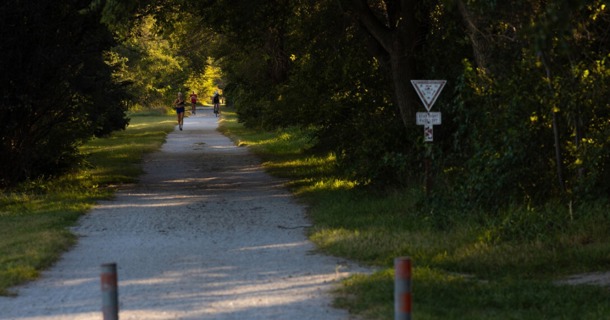
Lincoln, Nebraska, Sept. 30, 2026 — Many rural Nebraskans use trails around their communities and receive different benefits from their use, according to the latest batch of results from the 2026 Nebraska Rural Poll.
Many respondents to the poll — conducted annually by Rural Prosperity Nebraska with funding from Nebraska Extension — have used paved multi-use trails (50%) and natural surface multi-use trails (33%) in the past year. Thirty-nine percent have not used any trails in the past year.
People living in or near larger communities (5,000 people or more) are more likely than those living in or near smaller communities to use paved multi-use trails, according to the poll. But the latter are more likely to have used off-road vehicle trails. Twenty-six percent of respondents in communities of fewer than 500 residents have used this trail type compared to about 10% of those in larger communities.
There are also regional differences. People in the north-central region are more likely than those in other regions to have used long-distance/rail trails (like the Cowboy Trail or MoPac) and off-road vehicle trails. When viewing the responses by age, people 40 to 49 are most likely to have used natural surface multi-use trails and water trails. The youngest respondents, ages 19 to 29, are most likely to have used off-road vehicle trails.
“Trails seem to be important for many rural Nebraskans, with people using them for all different purposes,” said Becky Vogt, Rural Poll manager. “Whether it’s a paved trail close to home, a natural-surface trail or a longer trail connecting communities, rural residents are using these spaces to get outside, be active and enjoy the places they live in. The differences in trail use also show that communities have diverse interests when it comes to outdoor recreation.”
Exercise or fitness is the most-cited reason by those surveyed for using trails (60%). Many also say they use trails for enjoying nature or scenery (48%), recreation or leisure (47%) and spending time with family or friends (43%). Similarly, when asked which benefits trails provide to their household, most say exercise or improving physical fitness (67%); improving mental health or stress reduction (54%); spending time with family, friends or pets (54%); and connecting with nature or observing wildlife (53%).
According to the poll, many rural Nebraskans support additional development or expansion of the following trail types in their area: paved multi-use trails (42%), natural surface multi-use trails (38%), off-road vehicle trails (21%) and long-distance/rail trails (20%). Thirty-seven percent say no additional development is needed.
And many respondents seem to support improving trails by providing various amenities. Many say restrooms (53%), shade or shelter structures (45%), drinking water stations (44%), signage and maps (34%), and lighting (31%) would be beneficial for their household.
“These responses show that trails can provide much more than a place to exercise,” said Heather Akin, associate professor of agricultural leadership, education and communication. “For many rural Nebraskans, trails are places to relax, spend time with people they care about, enjoy nature and support overall well-being. The interest in additional trail development and amenities also suggests that many residents see value in having trails that are comfortable, accessible and useful for a variety of activities.”
When asked what limits their household’s use of trails, many respondents answered distance or travel time (42%), lack of time (36%) and lack of information about available trails (28%). Twenty-six percent said there are no significant barriers to using trails.
The “Trails” report and its implications for rural Nebraska will be highlighted during a Rural Poll webinar at noon CDT Oct. 21. Register here. The full report can be found on the Nebraska Rural Poll website.
The 2026 Nebraska Rural Poll marks the 31st year of tracking rural Nebraskans’ perceptions about policy and quality of life. It is the largest and longest-running poll of its kind. This April and May, questionnaires were mailed to nearly 6,900 Nebraska households, with 881 households from 86 of the state’s 93 counties responding. The poll carries a margin of error of plus-or-minus 3%. Current and past reports are available at https://ruralpoll.unl.edu.